Please note that this page is still being edited and may be subject to alterations. May 2026.
The intention of this website is to highlight the long history and connection of Bedlington to the development of waggonways, railways, and locomotive building.
It aims to explain Bedlington’s place in their wider development around the North East of England, the UK as a whole, and the wider world.
Hopefully, interest in this topic may help lead in the longer term to the physical presence of a museum within Bedlington to showcase this history in my hometown, inspiring more people from the area to take an active interest in the deep railway heritage of the town, and recognise that global railway history is heavily connected to the local area.
Where did railways begin?
The short answer is that it has some uncertainty and is quite subjective depending on the definition of a ‘railway’ that is chosen.
It is, however, quite widely accepted that railways are actually an ancient technology, with broad agreement that they date back to at least 0 BC/AD or earlier.
One notable example is the Diolkos (translates to ‘Portage Machine’) in Ancient Greece. This primitive ‘railway’ was a form of paved guideway to carry ships over land across the Isthmus of Corinth, avoiding a long and dangerous passage of the Peloponnese peninsula.
The exact date that this ‘railway’ was built is lost to history, with Thucydides, an Athenian historian and general c.460 BC to c.400 BC, appearing to suggest it was old during his lifetime, so in 2026, this would suggest an existence of the Diolkos dating back perhaps 2500 years!
Bedlington then was certainly far, far away from being the first place that railway technology existed, and in the ensuing two millennia (2000 years or so), the technology was developed in various places such as German mines where the ‘Hund’ (dog) was developed, with smooth wheels on smooth, parallel planks guided by a pin running in the gap between the planks (not dissimilar to how Scalextrix cars are guided around the track by the slot in the road).
Nottinghamshire to Bedlingtonshire
These technological improvements continued to be made, until we get to Huntingdon Beaumont, born and bred in Nottinghamshire in c.1560, who built a very early waggonway in 1603 and 1604 called the Wollaton Wagon Way, a two mile long route connecting two pits, as recorded by the Coleorton Heritage Group. This is the earliest documented waggonway, and was used until at least 1615, so was fairly successful being in use for over a decade.
Huntingdon was a big innovator in the coal industry more broadly, bringing horse powered pumps, boring rods to prove coal seams ahead of sinking a shaft.
His legacy is remembered in the Beaumont coal seam, usually from 1ft to 3ft thick and fairly shallow to the surface, spread widely across the Great Northern Coalfield, with many streets also named after him such as Beaumont Street and Beaumont Manor, both in nearby Blyth.
Reputedly, Huntingdon spent around £20,000 in the 1610’s into the pits around Bedlington and Blyth, a figure that works out at about £4,500,000 in April 2026 values using the Bank of England inflation calculator, money that was shortly lost and he apparently ‘…rode home upon his light horse.’ as written by William Gray in ‘The History of Newcastle’, 1649. Sadly Huntingdon died in debtors prison in 1624.
Beginning in 1608.
It is with Huntingdon that Bedlington begins it long association with rail transport, as in c.1608 Beaumont arguably introduced the waggonway to North East England.
Wooden waggons on wooden rails: a revolution in coal carrying
Running small, four wheeled wooden waggons (the double g being viewed as the correct North East spelling for these vehicles) upon wooden rails respresented a major technological leap; a massive reduction in friction compared to a muddy road using a ‘wain’ (road going heavy cart for coal) or packhorses where access to a navigable river wasn’t easy.
BRIO on a bigger scale
An easy way to visualise the physics behind a waggonway is to imagine a toddler playing with a BRIO trainset, a smaller but similar concept to the early waggonway.
When the toy train is on the track, the rolling resitance is low, so even a toddler can pull an impressive number of waggons along with ease, but put the same train onto a deep carpet, the magnets separate quickly due to higher friction.
This is not dissimilar to a horse pulling a waggon on rails compared to a ‘wain’ (a heavy cart pulled by four horses) on a muddy, unmade road of the 1600’s; the resistance of wooden wheels on wooden rails was much lower than wooden wheels in mud, meaning a horse could pull much more weight, making it much more efficient and less costly to move coal from pithead to the nearby port for shipment.
A waggonway therefore is a sizable investment into a pit; it takes a substantial amount of money to build the track and waggons, but once built allows much more coal to flow to market at a lower cost, delivering a potentially higher profit in the longer term.
Beaumont failed financially, but his idea became hugely successful
Whilst a financial failure for Beaumont himself his equivalent to millions of pounds having been lost; these waggonways became so synonymous with the North East Coalfield that they were often called ‘Tyneside Roads’, and without being introduced by Beaumont in c.1608, they may not have developed in the same way and with as much success as others found with them, particularly for pits around the River Tyne.
The excellent resource that is the North East Timeline mapping website starts at 1825, and shows the development of waggonways around the North East from 1621 with the opening of the Whickham Grand Lease Waggonway, which was only around 13 years after Beaumont in Bedlington, but which had many better factors such as a long lease from Queen Elizabeth the 1st from the Bishops of Durham and a monopoly of the coal trade in Newcastle allowing greater investment into waggonways, as outlined on the Land of Oak and Iron website. This waggonway was highly successful, and operated until sometime between 1706 and 1723 when many of the local pits were worked out. The cost of the waggonway was shared amongst a consortium of coal traders who could afford the investment, and local people finding a waggonway better than 700 wains chewing up the local roads.
Plessey Waggonway
It is not until almost a century after Beaumont arrived in Bedlington that a more successful waggonway was built in the area, this being the Plessey Waggonway, built sometime between 1692 and 1709. In 1722, the Ridley family bought Plessey Colliery, and the next year bought the estate of Blyth. In that first year, around 58,000 tons of coal were moved along the waggonway, some sold locally, but much of it shipped from Blyth.
Upkeep was expensive: in 1783, repairs cost £1140, the year after £843, and £830 in 1786, in April 2026 prices this would be approximately £152,593, £111,384 and £115,728 respectively.
In around 1813, the waggonway was ripped up, and the pits began to be ‘laid in’, meaning mining had ceased; due to newer pits opening at Cowpen and the old Plessey collieries being worked out.
Tanfield Waggonway
By around 1725, the famous Tanfield Waggonway was being built, which included major engineering structures such as the Causey Arch and its nearby embankment, with the latter still in railway use 300 years later as part of the excellent Tanfield Railway in Co. Durham and Gateshead.
The Causey Arch is considered to be the worlds oldest surviving railway bridge, predating the famous Stockton and Darlington Railway by around 100 years, but again represents the scale of investment needed to build a successful waggonway route, and has many clearly recognisable features of the soon to follow railways.
As can be seen, many of the major technological developments were taking place elsewhere in the North East with the waggonways, the Tanfield Waggonway perhaps being one of the best examples of the heavy engineering in the pre-railway era.
Moving forward to the early 1800’s, the Cornish engineer Richard Trevithick developed and successfully ran the first hauled train in February 1804 on the ‘Pen-Y-Darren’ line in Wales, but being too heavy for the track, breaking the rails, the ‘locomotive’, which had been adapted from a stationary engine returned to stationary use. Importantly, this line was also a ‘plateway’, the wheels being plain and without a flange (lip) on the inside edge as modern trains now have.
Hearing of the success of the locomotive, Christopher Blackett of Wylam Colliery wrote to Trevithick asking for locomotive designs, and the ‘Newcastle locomotive’, whilst fitted with flanged wheels, was too heavy for the wooden track at Wylam.
Track was limiting steam traction
As can be seen, the technological leap of steam locomotives was very much held back by the track materials; wooden waggonways couldn’t support the weight of a then heavy steam locomotive (very lightweight by modern standards), and even metal track such as cast iron ‘fish-bellied’ rails (named due to the curved underside) struggling to cope was holding back locomotive development.
Into the 1810’s, the number of steam locomotives being built began to increase, such as Wylam Dilly, now in Edinburgh, built c.1813 for use around Wylam where the famous George Stephenson, later railway engineer had been born and raised, working amongst stationary colliery engines and these early locomotives as a young man, by then in his early thirties.
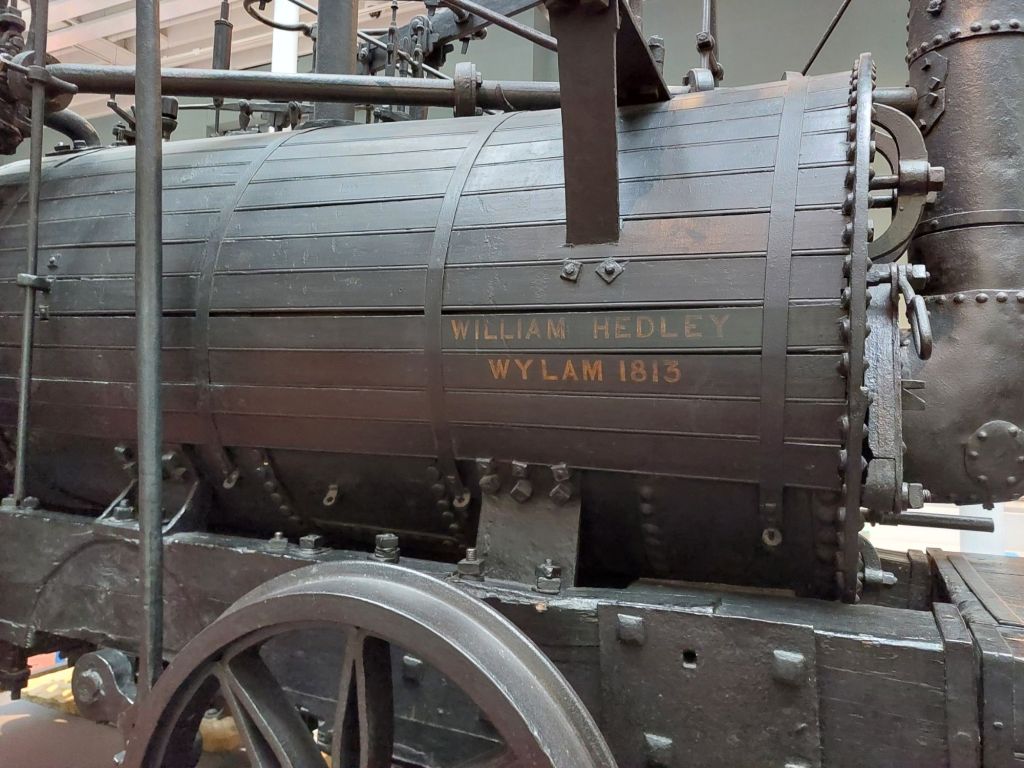
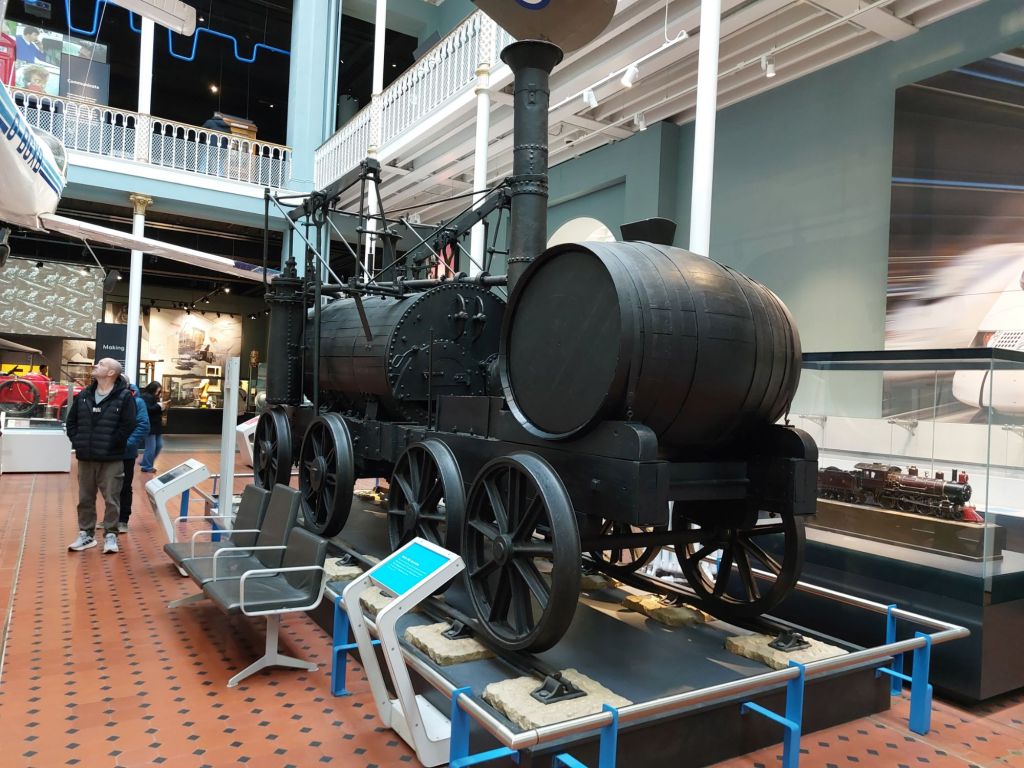
The locomotive above, Wylam Dilly, is the second oldest surviving locomotive in the world, surpassed only by Puffing Billy, the latter now in the Science Museum, London. Due to it breaking the cast iron rails, it was rebuilt with eight wheels to reduce breakage, before being returned to a four wheel layout once wrought iron rails were laid at Wylam.
The Birkinshaw rail of 1820
In 1820, John Birkinshaw of Bedlington Ironworks patented a new design of wrought iron rail; rolled into 15ft lengths, again with a fish-bellied pattern it was a huge leap forward in track design; indeed one that came to the attention of the famous George Stephenson.
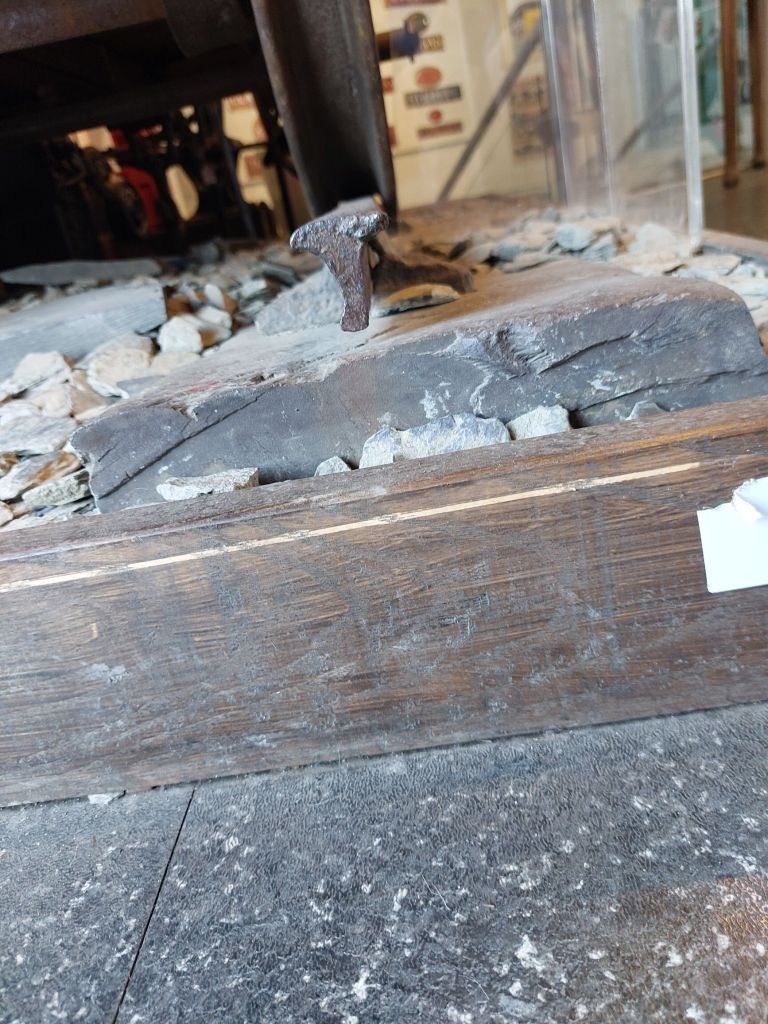
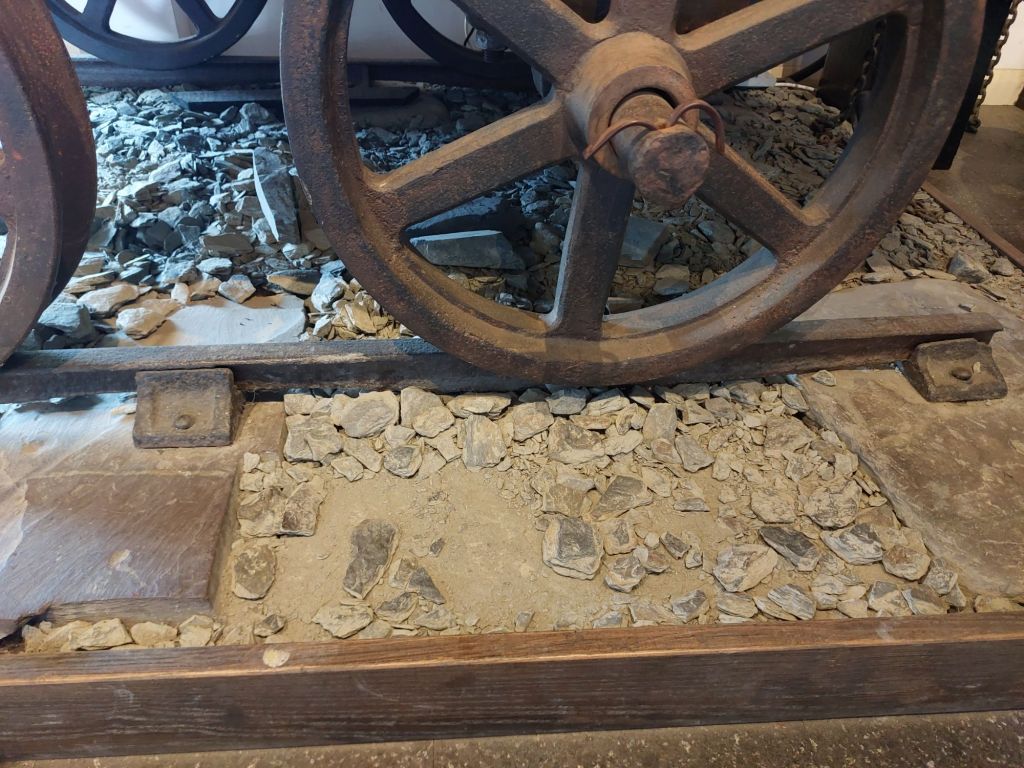
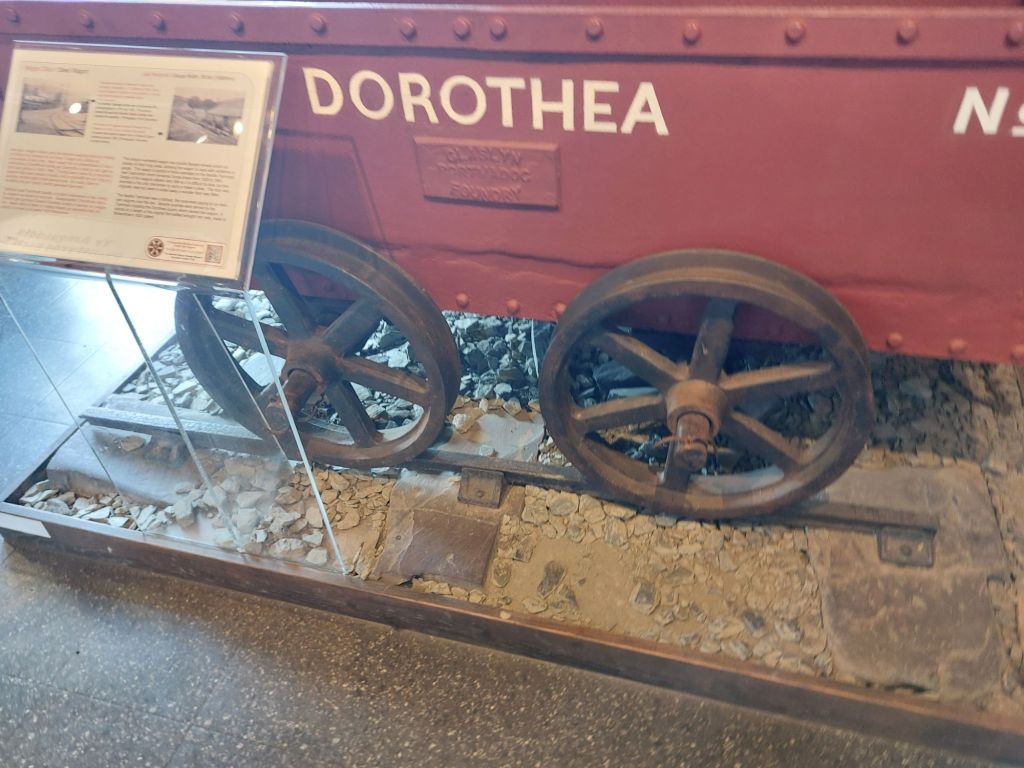
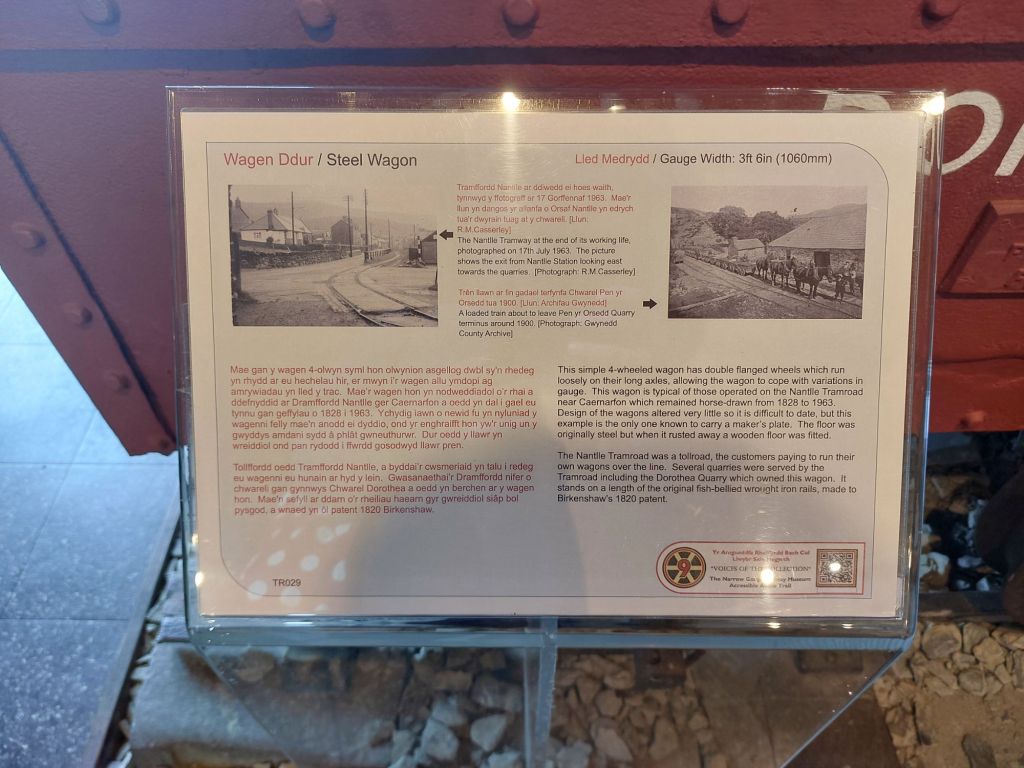
An example of this revolutionary rail survives in the Narrow Gauge Railway Musuem at Tywyn Wharf station on the Talyllyn Railway, Wales, UK.
 bedlingtonrailwaymuseum